Boos Block RA-Board Review: Why Thickness Protects Your Knives
By Noa Feld • 24th Apr
If your knives are dulling faster than they should, the culprit might not be your steel (it might be your board). A Boos Block RA-Board Review reveals how thickness, material, and the right tactile feedback form a shield around your blade. Unlike the common misconception that all cutting boards are equal, the RA-Board's 2¼-inch construction fundamentally changes how your knife moves through food and (critically) how your hand moves with it. For a deeper, data-backed look at how board mass affects knife edges, read our optimal thickness guide. In this guide, I'll walk you through why this specific board matters for kitchen counter protection and edge longevity, and how to integrate it into a prep station that feels secure from your first chop.
The Problem: Why Standard Boards Fail Your Knives
Most home cooks don't realize that edge damage starts before the knife even touches down. A thin, hard board (or worse, one that slides across the counter) forces your hand to grip tighter and your blade to land with excessive force. That's when micro-chipping happens, and stress builds up at the molecular level of your steel.
I once taught a neighbor who flinched at every chop. Her plastic board skittered across the counter, her knuckles hovered (never gripping), and the clatter of impact sent her into retreat. We swapped her setup for something with better grip and stability, and within a week, she wasn't thinking about safety anymore... she was feeling the rhythm of the cut.
That shift happens when three things align: a board that gives slightly (never rebounds like glass), a surface that anchors your hand (never slides), and enough mass to absorb shock without vibrating back into your palm.
What Makes the RA-Board Different: Thickness as Protection
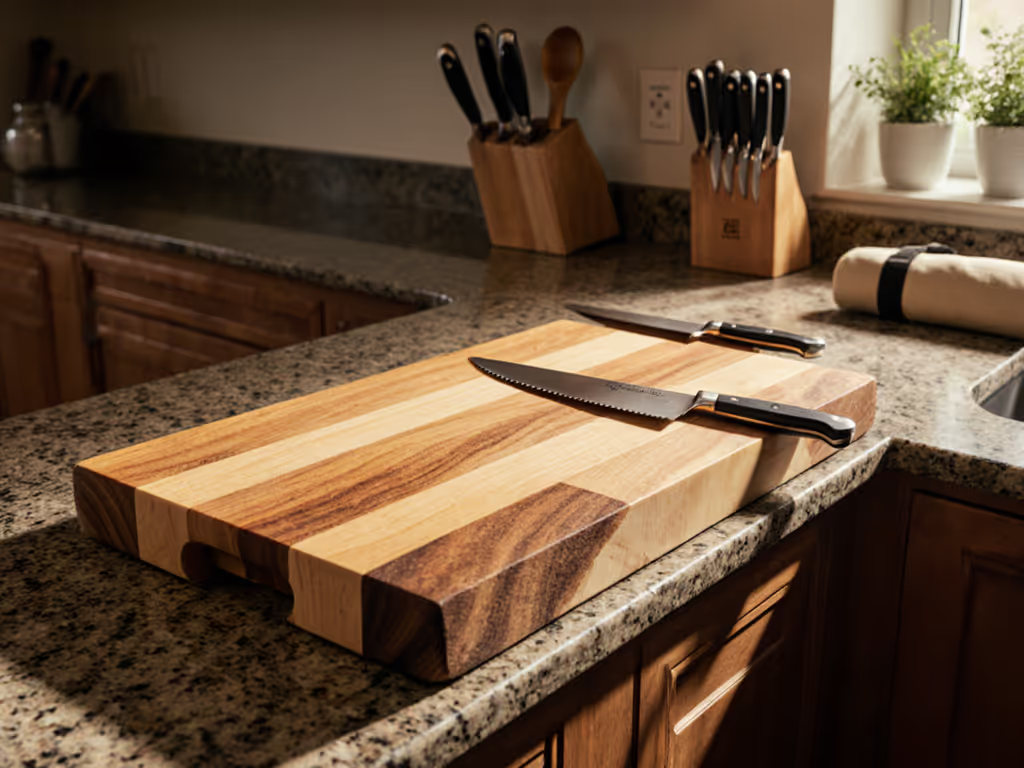
The RA-Board is 2¼ inches thick (substantially heavier than standard boards). This isn't about aesthetics or showing off counter real estate. Thickness solves two concrete problems:
Reduced vibration and impact shock. When your blade meets food, a thin board flexes and bounces, forcing the edge to absorb recoil energy. The RA-Board's mass absorbs that shock, so your knife stops cleanly and your wrist doesn't.
Greater stability and zero creep. A heavier board naturally resists sliding, even on a smooth countertop. Paired with recessed finger grips, it stays put when you press down, no wedging, no reaching, no fatigue.
Material Foundations: Maple vs. Cherry, and Why Edge-Grain Matters
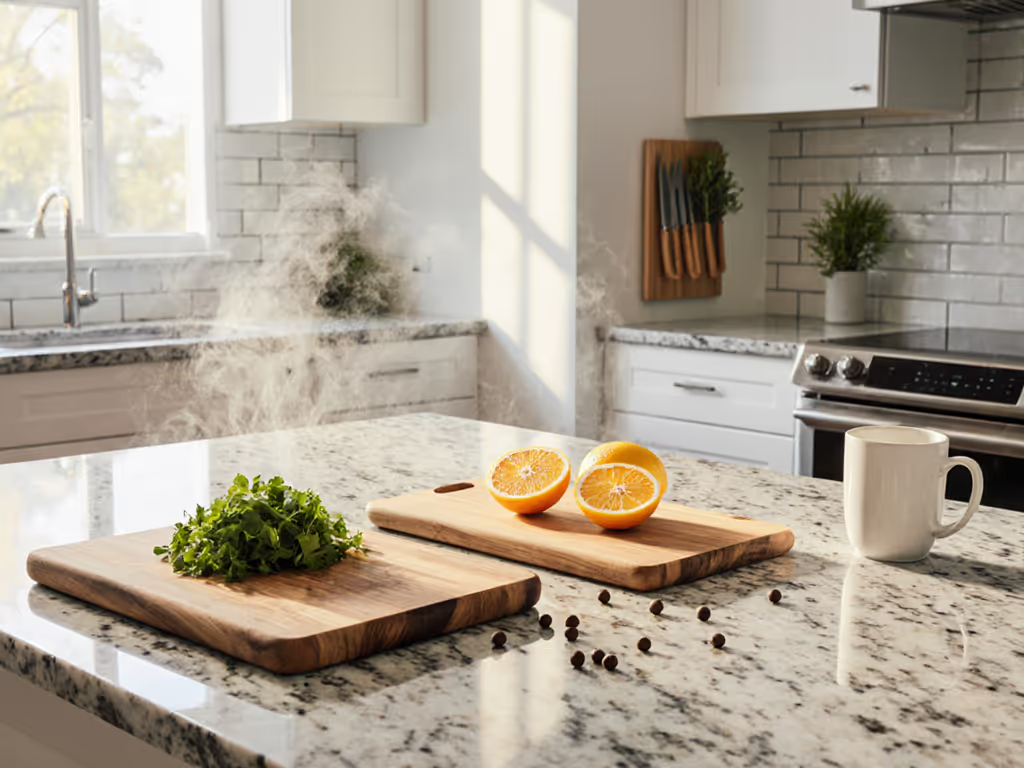
The RA-Board comes in two options: solid Northern Hard Rock Maple or American Cherry, both at the same thickness. Both are NSF Certified and built for professional use. Here's the practical difference:
Northern Hard Rock Maple is denser and slightly more resistant to rapid wear. It's the classic choice across commercial kitchens because it forgives heavy use and develops character over years; minor dents fade as the wood re-expands with humidity. For home cooks working 4-7 nights per week, maple is the warmer, friendlier choice if you like wood that softens with age.
American Cherry is marginally softer than maple and shows patina faster. It's beautiful straight out of the box and appeals to cooks who want the board visible on their counter. Cherry boards are forgiving on edges; the slight give in the wood means less rebound. If you own high-RC Japanese steel (58-62 HRC), cherry edges offer a gentler landing.
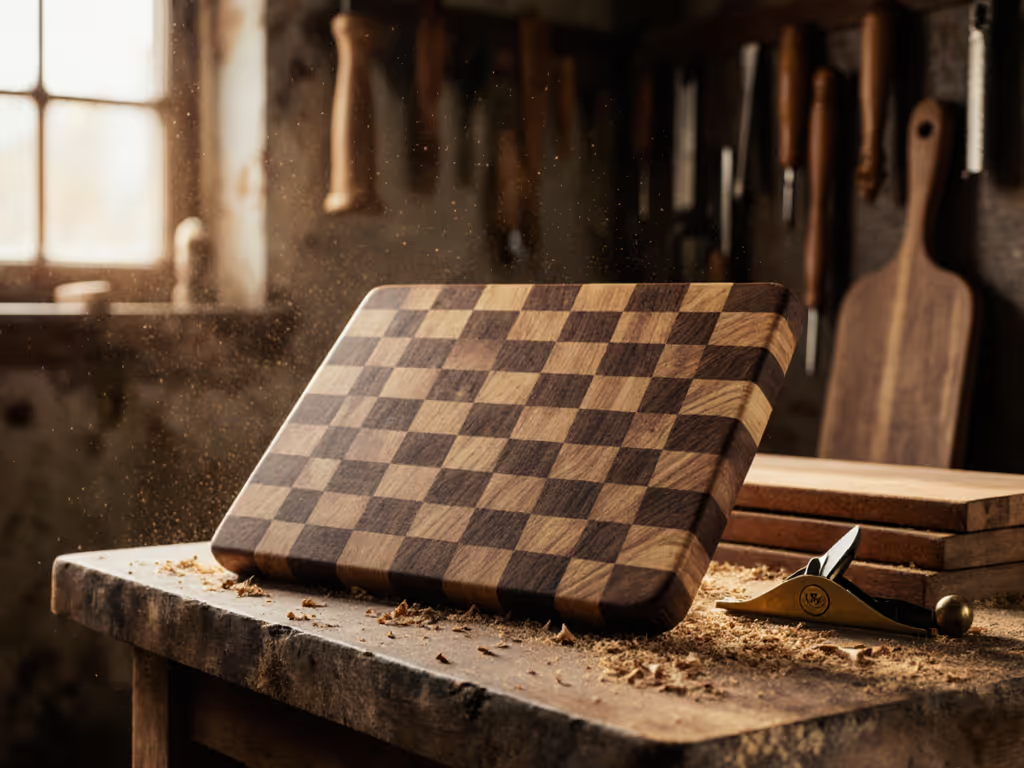
Both are edge-grain construction, which means the growth rings run perpendicular to the cutting surface. This grain orientation is crucial: it self-heals minor cuts as fibers re-expand, resists deep gouging, and, most importantly, doesn't splinter. If you're curious about what's happening at the fiber level, explore the wood's self-healing science. End-grain boards (rings running parallel) are thicker, more forgiving, and durable, but they're also harder on edges due to the density of the cross-section. Edge-grain strikes the balance between edge-friendliness and longevity.
The Tactile Experience: Grip, Give, and That Soft Thwack
This is where the RA-Board earns its keep in a knife-focused kitchen. When your knife hits the board, you should feel:
-
A soft thwack, not a clang. The wood absorbs the sound, so prep isn't fatiguing to your ears or your nervous system. Quiet kitchens feel calm; calm kitchens mean better knife control.
-
Slight give under the blade, then stability beneath. Your knife sinks just enough to feel the food part, but the mass of the board means the blade never catches or binds. The sensation is glide, not stick.
-
Secure grip from the recessed finger holds. These aren't cosmetic: they're hand-placement cues. Your thumb finds a grip point without thinking, and your forearm knows exactly where the board ends. This is safety built into tactile feedback.
When you press down on the board to stabilize a carrot or a head of lettuce, the weight of the RA-Board transfers into the counter, not back into your palm. That's the engineering. Your hand relaxes because it's held, not by fear, but by architecture. Comfort builds confidence; confidence keeps edges where they belong.
Setting Up Your Station: Stability and Placement Cues
Thickness is only half the equation. The board's potential is realized in how you set it up.
Stability Checklist
-
Clear the counter directly in front of you. The board should be at knife-height (roughly elbow-bent). For layout tips that save motion and strain, see our counter space optimization guide. If you're reaching down or up, you're already losing control. The RA-Board's weight wants to sit flat; honor that.
-
Use a damp kitchen towel underneath if your countertop is especially slick. The board's mass doesn't slide easily, but under high-speed repetitive work (say, 50 quick tomato slices), even a 10-pound board can creep. A towel underneath adds zero friction but anchors the board's perception in your body.
-
Position the board so your body is parallel, not twisted. Your wrist stays neutral, your elbow stays close, and your knife arm swings from the shoulder (not the wrist). The RA-Board's recessed grips support this because they make the board's edges tangible. You feel where the boundary is, so you don't unconsciously reach past it.
Hand Placement for Maximum Control
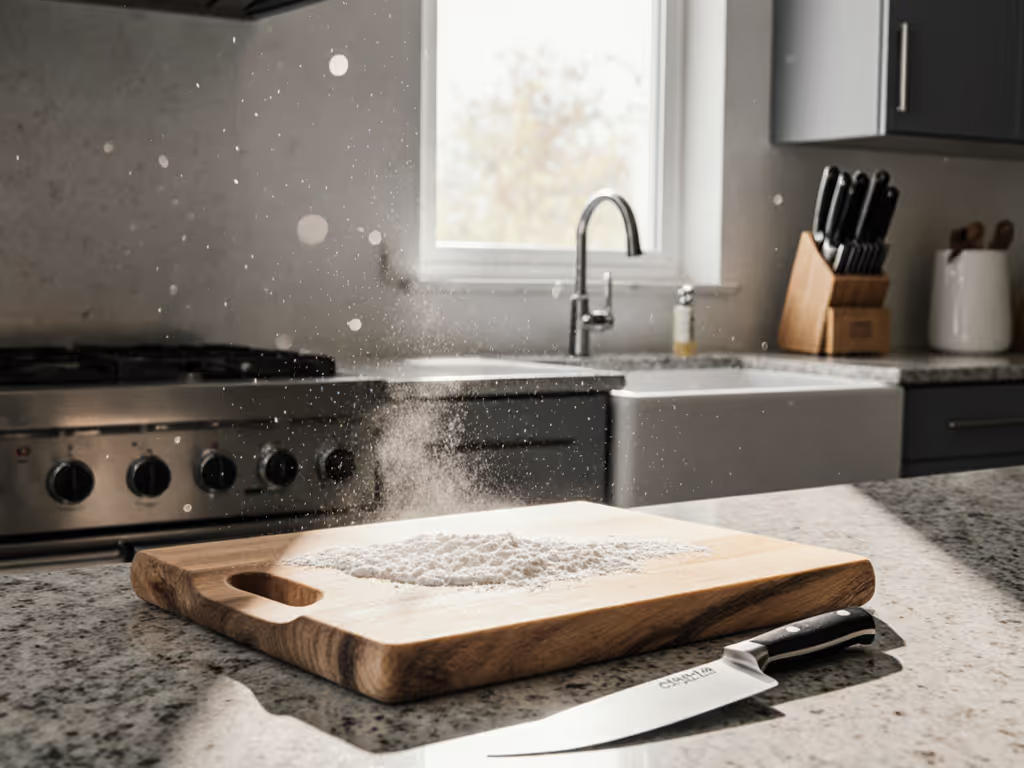
Hold the board steady with your non-knife hand using the recessed grip. Your thumb cups the edge from underneath (if there's a grip), and your fingers stay on top, well away from the blade's path. This isn't a vice grip: it's a guide. You're using the board's weight, not your hand strength.
Your knife hand starts with the blade pointed downward at a 20-30 degree angle (this is not a sharpening angle; it's a practical prep angle). As you rock or slice, let the board be your anchor. You're not fighting the wood; you're using it. That small mindset shift pays off quickly.
Maintenance: Keeping Your Investment Secure
A 2¼-inch solid wood board is built to last decades. Two simple practices keep it there:
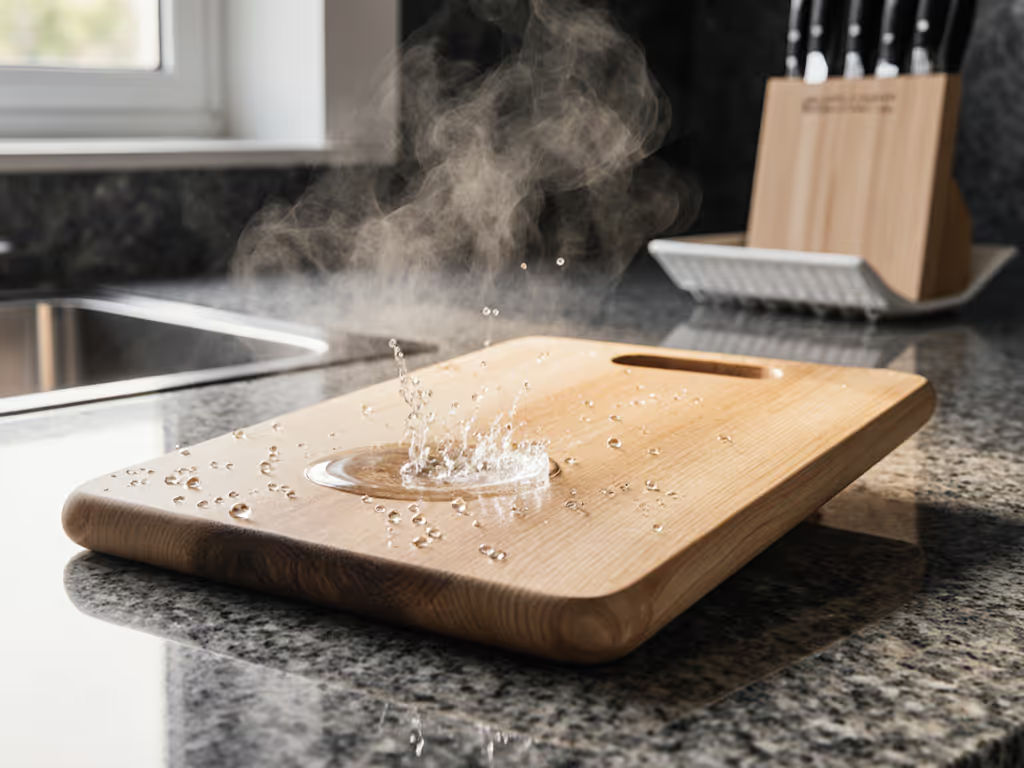
Oiling. Hand-wash the board in warm soapy water immediately after use. After it air-dries (standing upright so water drains off the bottom), rub a food-grade mineral oil over the surface every 2–4 weeks, or monthly if you use the board heavily. Oil fills small cracks before they become deep gouges and keeps the wood stable. It takes 3 minutes. The RA-Board may come with care instructions; follow them as written. Cherry benefits from regular oiling more visibly than maple, as it will deepen in color with care.
Drying orientation. Never leave the board flat to dry after washing. For step-by-step care that minimizes cupping over time, follow our warp prevention guide. Stand it upright against a wall or in a dish rack. Flat boards absorb water unevenly and cup or warp. The RA-Board's thickness reduces this risk, but proper drying is still essential.
Hand-wash only. Dishwashers are the enemy of wood boards. The heat cycles cause expansion and contraction; the alkaline detergent can lighten the wood. A 30-second hand wash and a dry towel are all you need.
NSF Certification confirms that the RA-Board meets commercial food-safety standards, and sanitation is not a concern with wood when it's cleaned properly.
Comparing Your Options: When to Choose Maple, When to Choose Cherry
| Consideration | Maple | Cherry |
|---|---|---|
| Durability under heavy use | Excellent; self-heals minor scars | Very good; shows patina faster |
| Gentleness on high-HRC blades (58+) | Good; solid support with slight give | Excellent; softer landing for delicate steel |
| Visual aging and character | Subtle; darkens slightly over years | Pronounced; deepens and warms quickly |
| Counter presence | Professional; blends with most aesthetics | Rich; statement piece, leaning warm |
| Maintenance demands | Low; consistent care schedule | Moderate; requires regular oiling for color retention |
| Price range | Mid-to-upper | Upper-mid (slightly more than maple) |
| Best for | Daily heavy use, commercial home prep, durability-first | Visible counter displays, Japanese high-HRC steel, beauty-conscious cooks |
Both boards are NSF Certified and built with edge-grain construction. The choice is genuinely about your knife collection and your prep rhythm, not about which is "better."
The Real Measure: Edge Longevity and Prep Confidence
Here's what distinguishes the RA-Board in practice: customers report fewer sharpenings and no blade damage over years of daily use. Not because the board is magical, but because the combination of thickness, material, and tactile feedback makes correct technique easy. Your hand settles into the board's weight and grip cues. Your knife stops worrying your wrist. Prep becomes a rhythm, not a chore.
A customer who switched from plastic reported the sensory shift immediately: the wood's forgiving surface, the stable grip, the quiet thwack instead of a harsh plastic clack. Within weeks, she'd reduced her honing schedule because the board was doing its job: protecting the edge while you focus on the cut.
This is what thickness buys you: not a status symbol, but a station that keeps your knives sharper, your hands steadier, and your prep flow consistent.
Next Steps: Building Your RA-Board Station
If you're ready to upgrade, here's your actionable plan:
-
Decide between Maple and Cherry. If you work daily with Japanese high-HRC steel or want a visible showpiece, cherry rewards you. If durability and low maintenance are priorities, maple is your foundation. If you're weighing RA-Board against other Boos options, start with our Boos series comparison.
-
Measure your counter space now. The RA-Board comes in multiple sizes (the standard is 18" × 12"). Make sure your choice fits comfortably between your sink and prep area, with room to maneuver. You want the board accessible, not crammed.
-
Prepare your supporting setup. Grab a damp kitchen towel, a small bottle of food-grade mineral oil, and a rubber or wooden spatula for board-to-pan transfer (metal tools can gouge). These three items transform the board from a luxury into a system.
-
Commit to the three-step care routine: wash immediately, dry upright, oil monthly. This isn't overhead: it's five minutes of maintenance per month that extends the board's life by decades and keeps your edges sharper.
-
Set up your stability check. Before your first chop, place the board on your counter, position your body parallel, and grip the recessed handle. Take three slow knife strokes to feel how the board anchors your hand. This is the moment you'll know whether thickness was the missing piece.
Comfort builds confidence; confidence keeps edges where they belong. The RA-Board is built on this principle, and it waits for you to feel the difference.
Related Articles