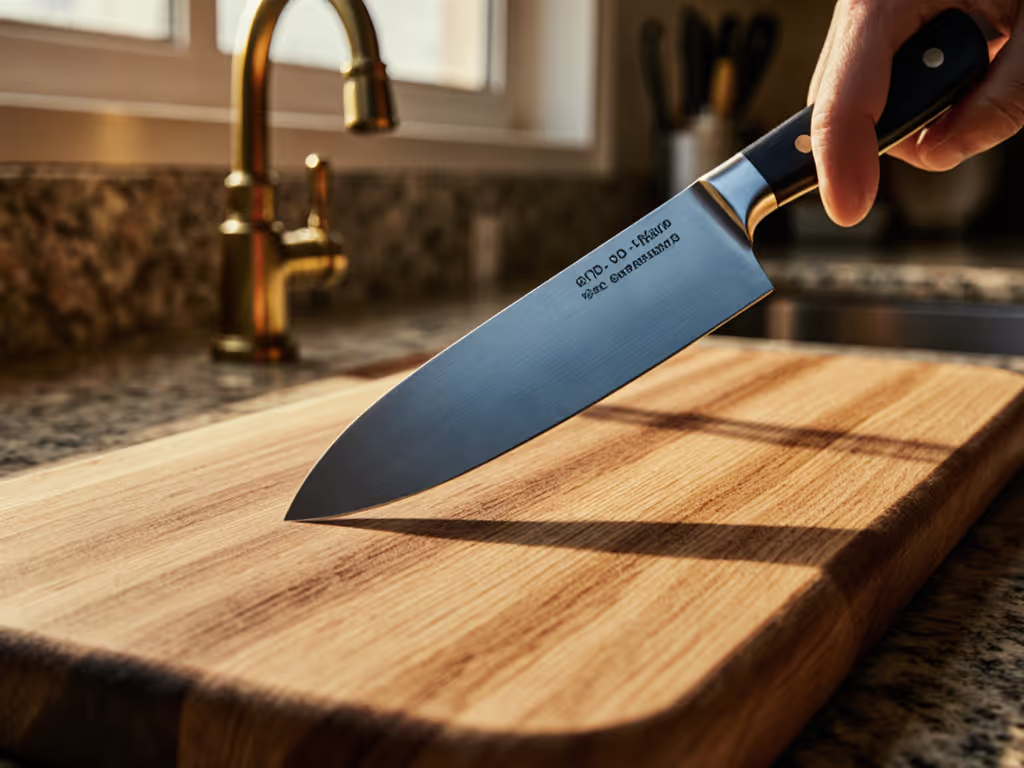
Knife Steel Chemistry: How Wood pH Preserves Your Edge
By Noa Feld • 13th Jan
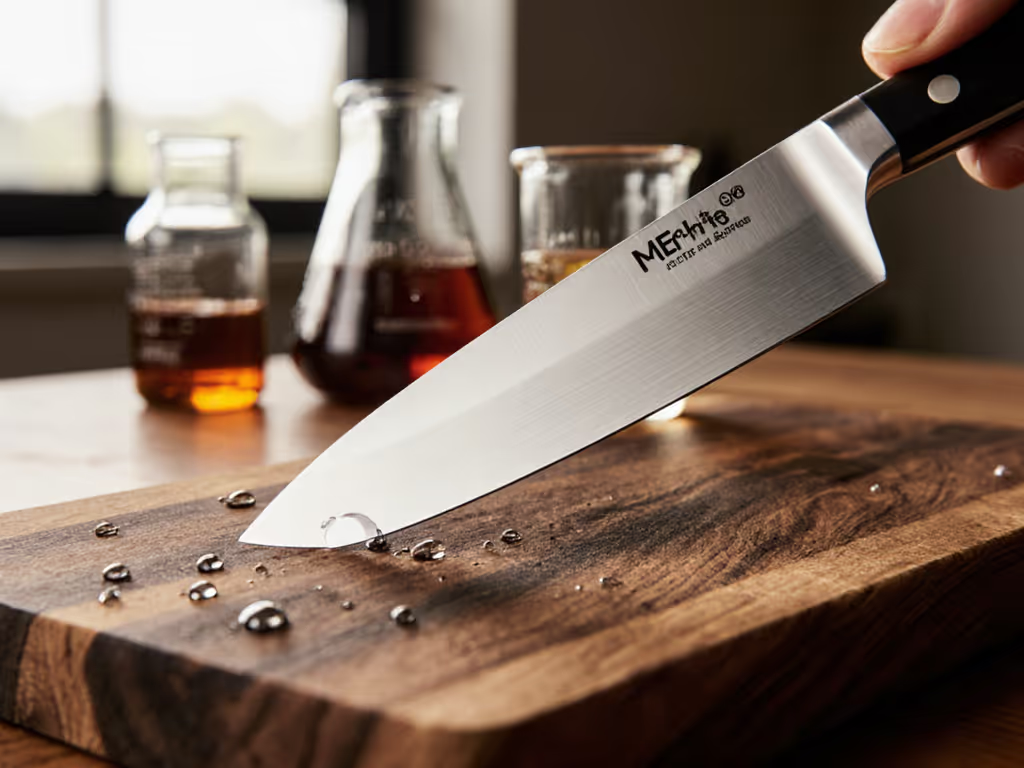
Most home cooks worry about blade hardness or exotic steel names when shopping for knives, but neglect the silent partner that actually protects your edge: the cutting board. Understanding wood pH knife compatibility reveals why some boards silently sabotage your knife steel chemistry, while others extend edge life through molecular harmony. I've seen beginners slice tomatoes fearlessly on boards that feel right, not because of expensive steel, but because the wood's acidity levels and surface texture created a forgiving partnership. Let's unravel this often-overlooked dynamic in plain terms.
Why does wood pH matter for knife edges?
Wood isn't inert; it is a living material with measurable acidity levels that interact with your blade's surface. High-carbon steel knives (like those from Japanese blacksmiths) contain iron vulnerable to corrosion when exposed to moisture and acids. Woods like cherry or maple lean slightly acidic (pH 4.5 to 5.5), which can accelerate oxidation on unprotected blades if left damp. But here's the crucial nuance: pH matters far less than board maintenance. A well-oiled maple board won't corrode your knife any more than a walnut board (pH 6.0 to 6.5) if both are dried promptly. The real threat? Lingering moisture that lets any wood's natural acids interact with the steel. I taught a neighbor who flinched at every chop, swapping her glass board for a soft rubber mat over a damp towel didn't just quiet the thwack; it slowed moisture transfer to the blade. Her high-carbon nakiri stopped spotting within days.
How acidity levels affect corrosion risk
Not all steels face equal risk. Stainless blades (11%+ chromium) resist corrosion better than high-carbon steels, but no steel is immune to prolonged acid exposure. Consider this:
- High-carbon steel (e.g., White #1): Most vulnerable. Acidic woods + moisture = faster spotting. Mitigation: Use neutral-pH woods (walnut, olive) and always dry immediately after use.
- Stainless steel (e.g., VG-10): Chromium forms a protective layer, but low-grade stainless still pits near acidic foods (like citrus) on acidic boards. Mitigation: Prioritize boards with balanced pH (5.8 to 6.8) and avoid leaving acidic foods resting on cut surfaces.
- Super-stainless (e.g., MagnaCut): Rarely corrodes from wood pH alone, but poor board hygiene (damp storage, infrequent oiling) creates micro-pits where acids can penetrate.
Comfort builds confidence; confidence keeps edges where they belong.
The myth that "wood actively preserves edges" oversimplifies the molecular interaction with cutting boards. It's not the pH itself protecting your knife; it's how wood's cellular structure cushions the blade. When you chop, the wood fibers give slightly, reducing shock to the edge. Acidic woods work fine if maintained properly because their structure still absorbs impact (even if their pH requires extra drying diligence).
What's the best wood for German vs. Japanese knives?
Forget steel origin myths. German knives (softer steel, ~56 HRC) need less pH precision than hard Japanese blades (~63 HRC). Why? Softer steel bends slightly on impact; ultra-hard steel can microchip if it hits uneven resistance. But wood pH isn't the deciding factor, it's surface smoothness and moisture control.
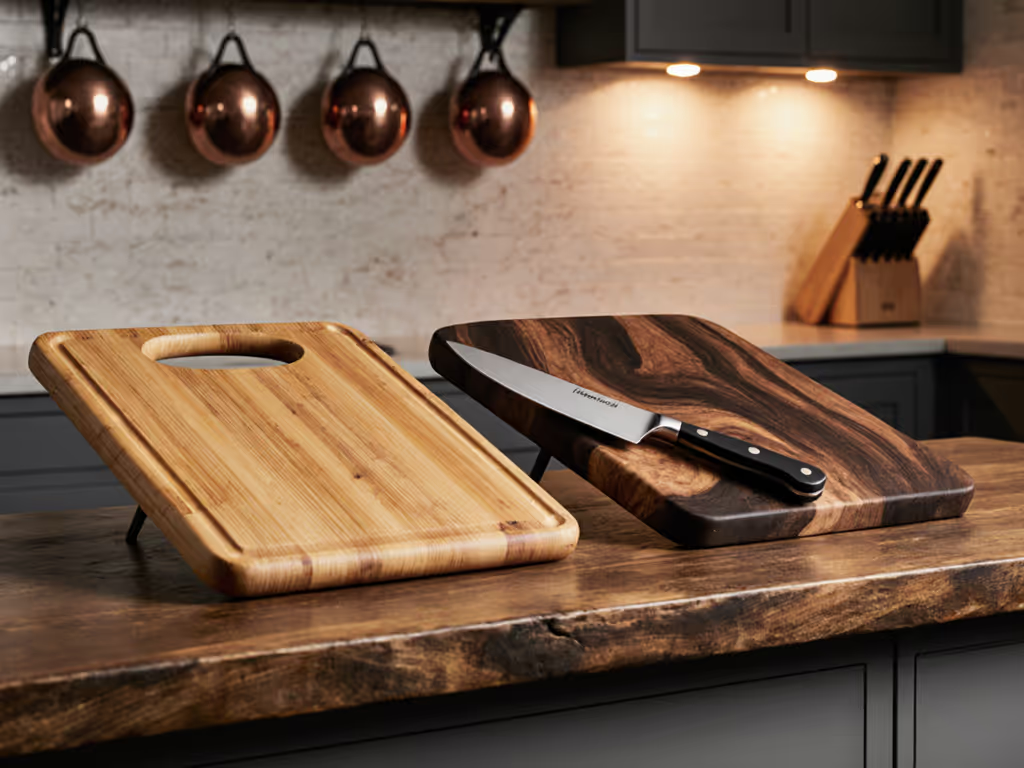
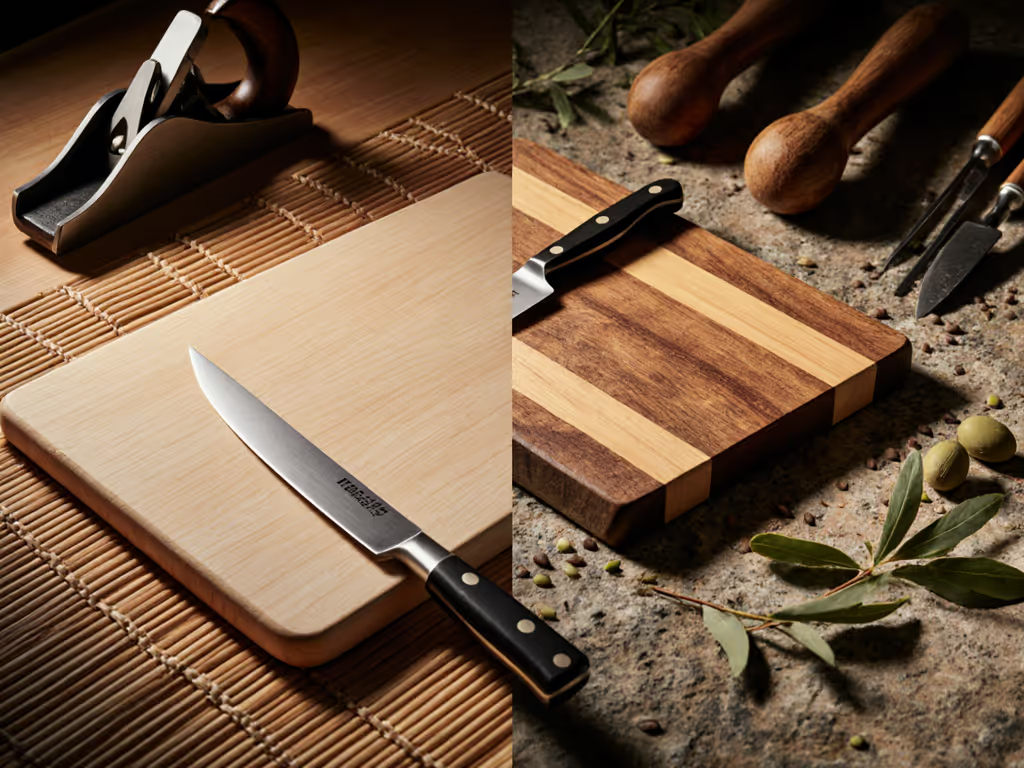
- End-grain boards (maple, walnut): Neutral-pH woods excel here. Their vertical fibers absorb blade impact like a trampoline, reducing edge stress. Ideal for all steels, but requires oiling to prevent drying cracks that trap moisture.
- Edge-grain boards (cherry, bamboo): Bamboo's silica content will dull edges faster than pH issues. Acidic cherry? Manageable if sealed, but its tighter grain offers less give, increasing chip risk for hard Japanese blades.
Stability checks > wood species
I prioritize blade corrosion prevention through board behavior, not botany. Press your board's corners down... does it rock? A wobbly board makes blades deflect unpredictably, causing skids that chip edges. Test this:
- Place a damp towel under the board. Does it stay put during vigorous chopping?
- Run your palm over the surface. Can you feel ridges from deep cuts? (Ridges catch edges.)
A $200 maple board that's warped or dry harms edges more than a well-maintained $30 walnut board. Learn how to prevent warping with proper maintenance. Focus on:
- Flatness: No rocking = consistent blade contact.
- Moisture management: Wipe immediately after acidic foods (lemons, tomatoes).
- Texture: Lightly sand if grooves form (deep cuts create edge-snagging ledges).
Does "food-safe wood properties" really prevent corrosion?
"Food-safe" refers to non-toxic finishes, not corrosion resistance. Boards treated with mineral oil (not vegetable oil!) prevent moisture absorption, but won't shield blades from acidic foods. True blade corrosion prevention happens in your workflow:
- The 10-second rule: Wipe boards immediately after cutting acidic foods. Letting lemon juice pool for 5 minutes does more damage than wood pH. Frequent citrus prep? Check our acidic foods board guide for science-backed choices.
- Salt alert: Salt accelerates corrosion anywhere, so rinse boards after cutting cured meats or fish before wiping dry.
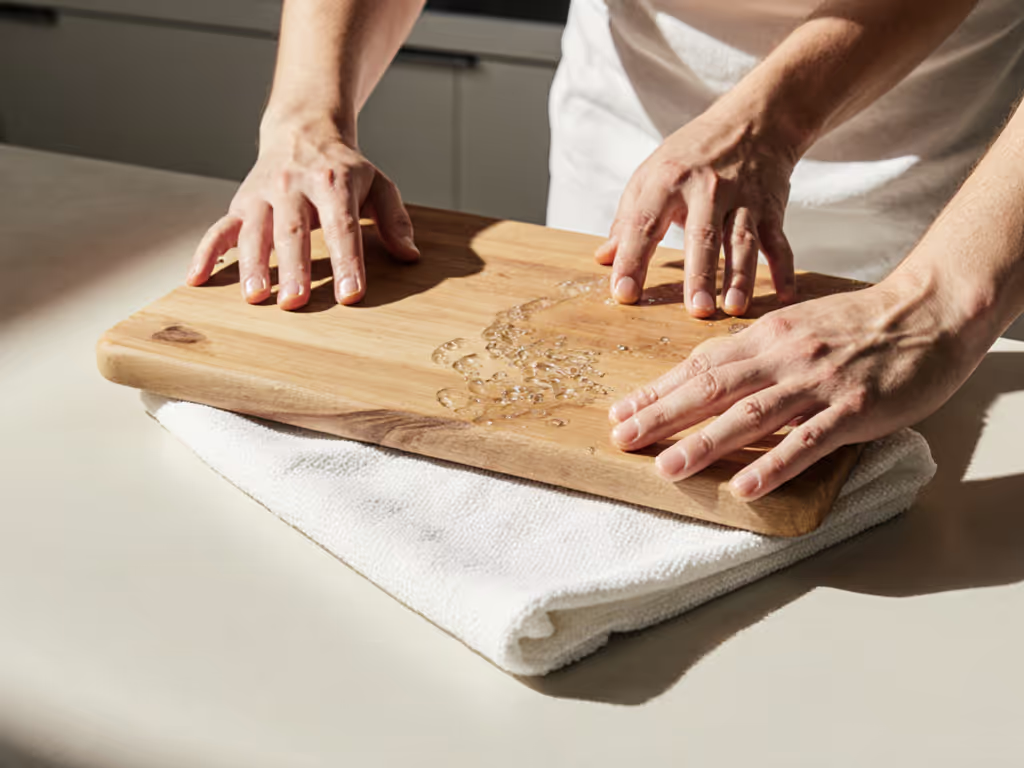
- The towel test: After washing, press a dry towel against the board. If it dampens, it's still holding moisture against your blade.
Debunking the "molecular interaction" myth
You'll hear claims like "wood fibers magnetically realign steel molecules." False. What does happen:
- Wood's porous surface traps microscopic moisture droplets that would sit on glass/plastic boards, exposing blades to humidity longer.
- Properly sealed wood releases moisture faster than plastic when aired out, reducing oxidation time.
This is why a neglected plastic board stains and dulls blades: its surface pits hold acidic residues and create uneven resistance. Wood's advantage is structural forgiveness, not chemistry. Explore the microscopic self-healing of wood and how it protects knife edges.
How to match boards to your knife without memorizing pH charts
Stop overcomplicating wood pH knife compatibility. Focus on these actionable steps:
1. Prioritize moisture control
- After cutting: Rinse board, wipe dry with clean towel, stand upright for airflow.
- Oiling: Every 2 to 4 weeks (or when wood looks gray). Use food-grade mineral oil (not coconut or olive oil; they turn rancid).
- Acid alert: For citrus/fish, use a dedicated board and rinse it within 5 minutes.
2. Feel the give, not the grain
Press your thumbnail into the board:
- Softwoods (cedar): Indent easily (too soft, wears fast, unstable).
- Hardwoods (maple): Resist slightly, ideal give for edge protection.
- Overly hard boards (bamboo): No indentation, which will dull blades faster.
3. Stability before aesthetics
- Grip test: Hold the board with one hand. Does it slide when you press down with the other?
- Solution: Always place on a damp towel or non-slip mat. A sliding board forces you to grip the knife tighter, a major cause of slips.
Hand placement cues for safer cuts
- The claw grip: Curl fingertips inward, knuckles guiding the blade. If your board rocks, this grip destabilizes.
- Tempo check: If your chops sound like thwack-thwack-thwack, you're hitting too hard. Slow down; let the blade's weight do the work on a stable board.
grip-first prep turns edge anxiety into clean cuts.
Why "safety is speed" starts with your board
A wobbly board makes you tense up. Your grip tightens, your tempo rushes, and edges slip... that's when micro-chips happen. The quiet shush of a blade gliding into stable wood isn't just soothing; it means the edge isn't fighting resistance. I've watched cooks gain 30% faster prep times after stabilizing their boards, not because they moved quicker, but because they stopped pausing to steady slipping ingredients.
The takeaway: Wood pH matters least when you control moisture and prioritize stability. A neutral-pH board with deep cuts harms edges more than an acidic wood kept dry and flat. Your knife's steel chemistry thrives on consistency, not perfection. Wipe it down, keep it dry, and let the board's give absorb the shock. When your setup feels quiet and sure, safety is speed; every chop settles right where you place it.
Related Articles